
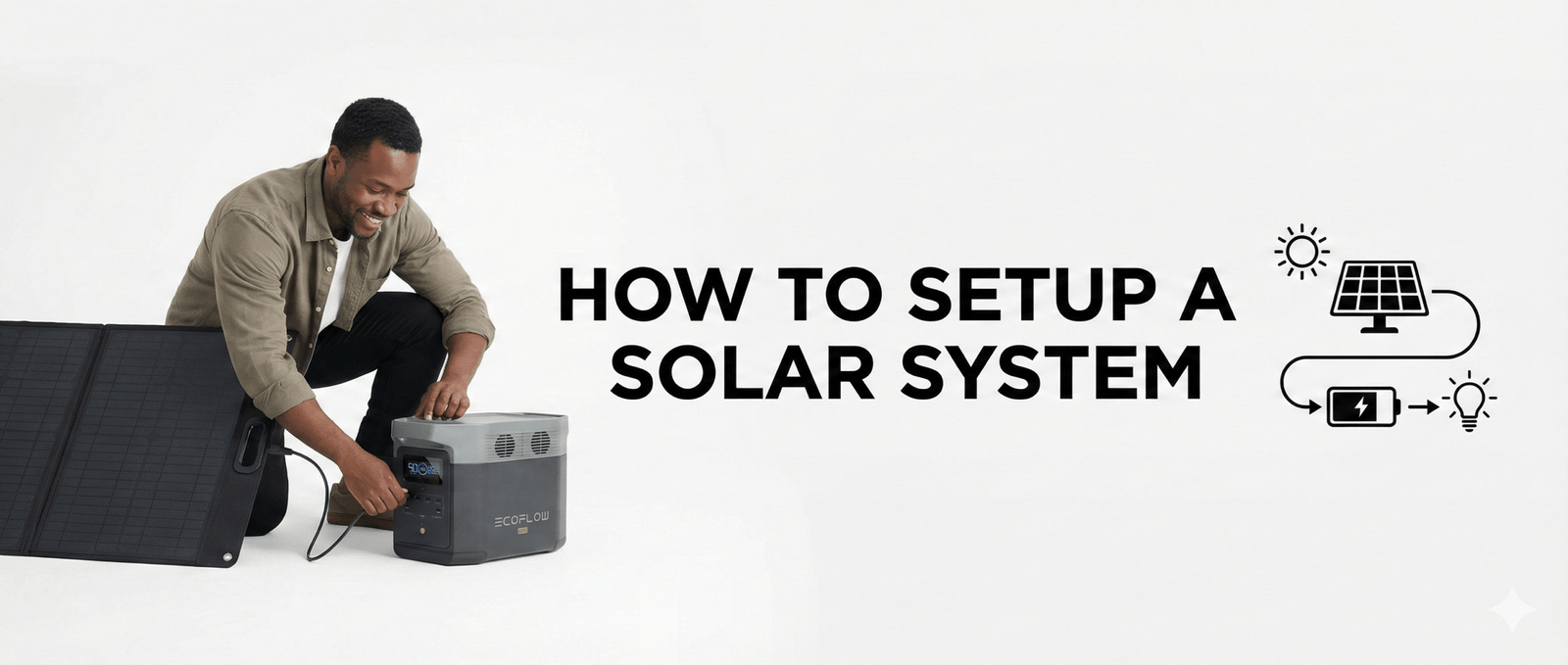
How to Setup a Solar System
Gaining independence from the power grid used to require expensive contractors and complicated wiring. Today, harnessing the power of the sun is almost as easy as plugging in a toaster.
Whether you are looking to power a camping trip, prepare for emergency blackouts, or just want to lower your reliance on the grid, setting up a portable solar system is easier than you think.
In this guide, we will walk you through the simple, four-step process of connecting solar panels to an EcoFlow portable power station to start generating free, unlimited energy.
ECOFLOW RIVER 2 – 256Wh Portable Power Station (Fast Charging & 600W Output)
Before we go into the details, watch this quick YouTube Short demonstrating just how fast this process really is.
Why Go Portable Solar?
Unlike traditional rooftop solar, which is permanent and expensive, a portable setup using an EcoFlow unit offers incredible flexibility:
-
No Installation Costs: You don’t need an electrician. It is truly plug-and-play.
-
Mobility: Take your power source camping, RVing, or just move it around your backyard to chase the sun.
-
Emergency Readiness: If the grid goes down, you have an immediate backup power source that recharges itself daily.
The Components required
You only need three things to get started:
-
A Portable Power Station: (e.g., EcoFlow RIVER or DELTA series). This is the “battery” that stores the energy.
-
Solar Panels: To capture the sun’s energy.
-
A Solar Charging Cable: This usually comes with your EcoFlow unit (it has orange connectors on one end).
Step-by-Step Guide: Connecting the Dots
If you watched the video above, you saw how quickly this happens. Here is the breakdown of exactly what to do to ensure maximum efficiency.
ECOFLOW Solar Generator RIVER 2, 256Wh Portable Power Station with 110W Solar Panel
Step 1: Unfold and Angle Toward the Sun
Location is everything. Unfold your solar panels outside in a bright area.
-
Pro-Tip: Most portable panels come with a kickstand case. Use it to angle the panels so they are facing directly perpendicular to the sun rays.
-
Avoid Shadows: Even a small shadow from a tree branch covering just 10% of the panel can significantly drop your energy output.
Step 2: Connect the Panels
On the back of your solar panel, you will find two cables with connectors (usually standard MC4 connectors).
Take your solar charging cable. Snap the connectors from the panel into the adapters on the cable. You should hear a distinct “click” sound, ensuring a watertight and secure connection.
Step 3: Plug Into the EcoFlow
On your EcoFlow unit, locate the yellow input port (often labeled “Solar/Car Input”). Take the orange end of your charging cable (the XT60 or XT60i connector) and plug it firmly into this port.
Note: Ensure you are plugging into the Input port, not an output port.
Step 4: The Payoff (Check the Screen)
This is the satisfying part. Turn on your EcoFlow unit’s screen.
Look at the “Input” section on the main display. Within a few seconds of plugging it in, you should see the wattage number jump up from 0W. If you see a high number (e.g., 100W, 200W, or more depending on your panels), congratulations! You are successfully generating your own free electricity.
Setting up a solar system is no longer rocket science. By following these simple steps, you can secure your own power independence in under five minutes.

Tag:solar setup

You may also like

Belad Tech Academy Announces 100% Tech Scholarship for Newbies!

How to Generate Professional Financial Reports in Seconds